Beyond Base Pay: How to Compare Benefits and Perks
A benefits comparison guide for candidates weighing leave, health coverage, flexibility, learning budget, equity, and real work conditions against base salary.
Base salary is only one part of the decision. Benefits, leave, health coverage, flexibility, learning budget, equity, commute, and work model can change the real value of an offer.
What to take from this guide
- Separate cash, benefits, flexibility, equity, and work conditions before comparing offers.
- Value perks only when they are written, usable, and relevant to the candidate life.
- Ask about leave, health coverage, learning budget, equipment, commute, and review cycle.
- Use benefits as part of negotiation when base salary cannot move.
Perk types
Separate compensation from convenience
A benefit changes offer value when it reduces real cost, improves time, protects health, supports learning, or changes long-term upside.
A perk is weaker when it sounds attractive but has unclear rules, limited access, or little relevance to the candidate.
- Treat health coverage, leave, retirement, and fixed allowances as compensation components.
- Treat flexibility, equipment, and learning budget as work-condition components.
- Treat culture perks carefully unless the use case is clear.
- Ask which benefits are written into the offer.
Comparison table
Compare benefits by practical value
A higher base salary can still be weaker when commute, leave, medical coverage, work hours, or contractor risk are worse.
The candidate should write the practical value beside the base number before deciding.
| Component | Question to ask | Decision impact |
|---|---|---|
| Health coverage | Who is covered and what is excluded? | Can reduce real household risk |
| Leave policy | How much is paid and actually usable? | Affects recovery and family needs |
| Flexibility | Is remote or hybrid written or informal? | Changes commute and daily time |
| Learning budget | What can be used and when? | Supports growth only if accessible |
Negotiation lever
Use benefits when base salary is fixed
If base pay cannot move, candidates may still negotiate joining bonus, review timing, equipment, learning budget, flexibility, relocation, or leave.
Use ConnectsBlue to keep offer notes and role constraints visible so the final decision reflects the full package.
- Ask which components have flexibility.
- Prioritize benefits that solve a real constraint.
- Confirm changes in writing.
- Compare the full package before accepting.
Product proof
Career GPS shown inside ConnectsBlue
The guide connects planning advice to the real roadmap surface candidates use to define target roles, skill gaps, milestones, and next actions.
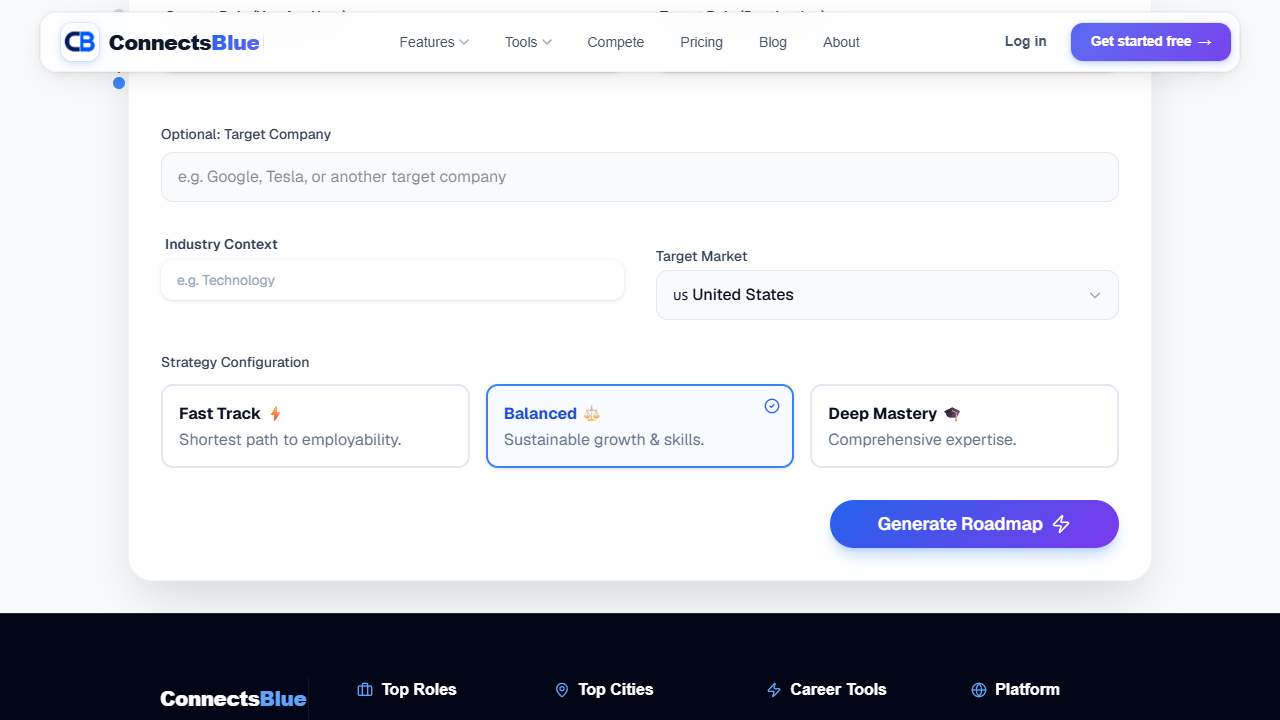
Screenshot captured from the public ConnectsBlue product experience.
Before accepting
Before accepting an offer based on perks
Use this checklist to compare base pay, health coverage, leave, flexibility, learning budget, equity, and written terms.
- Separate fixed pay, variable pay, benefits, and work conditions.
- Check which benefits are written into the offer.
- Estimate which benefits you will actually use.
- Ask about leave, health coverage, equipment, and flexibility.
- Use non-base components when salary bands are fixed.
- Confirm revised terms in writing.
Benefits FAQ
Questions candidates ask about benefits and perks
Which benefits matter most when comparing offers?
Health coverage, paid leave, retirement or provident components, flexibility, equipment support, learning budget, and review timing often matter most because they affect real cost and time.
Should I accept a lower salary for better benefits?
Only if the benefits solve real needs and are written clearly. Compare monthly cash, risk, growth, time, and personal constraints before deciding.
Can perks be negotiated?
Sometimes. If base salary is fixed, ask about joining bonus, review timing, equipment, learning budget, relocation, or flexibility.
How do I compare remote flexibility?
Ask whether flexibility is written into the offer, team-level practice, or manager discretion. Informal flexibility can change quickly.
Next step
Compare the package you will actually live with
Look beyond base pay and inspect the benefits, constraints, and working conditions that change real value.
Related Guides
Continue with practical articles on the same theme
Salary Negotiation Guide: Ask With Market Evidence
A practical negotiation guide for researching market range, timing the ask, comparing base pay with benefits, and choosing a calm counter-offer.
Global Salary Trends: Compare Offers Across Markets
A compensation-trend guide for candidates comparing remote pay, local bands, currency risk, equity, and benefits across markets.
Remote Pay: How to Benchmark International Offers
Remote Pay: How to Benchmark International Offers helps candidates compare pay with context instead of reacting only to the base number or the loudest salary headline.