Rising Unicorns in India: Salary Signals to Watch
A startup compensation guide for Indian candidates comparing unicorn salary signals, equity value, runway risk, role level, and offer trade-offs.
Indian unicorn and late-stage startup compensation can move quickly, but the package may mix high fixed pay, variable pay, equity, retention bonuses, and intense execution expectations.
What to test in the market
- Compare fixed pay and equity separately before judging total compensation.
- Ask how the role scope may change as the company grows or restructures.
- Check vesting, liquidity, bonus terms, and clawbacks before valuing upside.
- Treat startup pay as a balance of cash, learning, risk, and workload.
Equity reality
Treat equity as upside until the terms are clear
Equity can be meaningful, but only after vesting, exercise rules, liquidity, dilution, and company stage are understood.
A candidate should not trade fixed cash for equity without understanding how and when that equity can become valuable.
| Component | Question to ask | Why it matters |
|---|---|---|
| Vesting | What is the schedule and cliff? | Delayed value changes real compensation |
| Liquidity | How can employees sell or exercise? | Paper value may not become cash soon |
| Dilution | How might future funding affect ownership? | Percentage can change over time |
| Clawback | Do bonuses or buyouts have repayment terms? | Leaving early may create cost |
Startup fit
Check whether the operating style fits your life
Startup compensation can come with rapid context switching, shifting priorities, late calls, and unclear boundaries. Some candidates thrive there; others should trade some upside for stability.
Use ConnectsBlue to compare offers and role notes side by side so the final decision includes risk, growth, and work style.
- Ask about manager expectations and decision cadence.
- Clarify remote, hybrid, and travel expectations.
- Check team size, reporting line, and current product stage.
- Compare learning upside with workload and personal constraints.
Product proof
Interview Practice shown inside ConnectsBlue
The article links preparation advice to the real practice flow for role-based mock interviews, answer review, and confidence building.
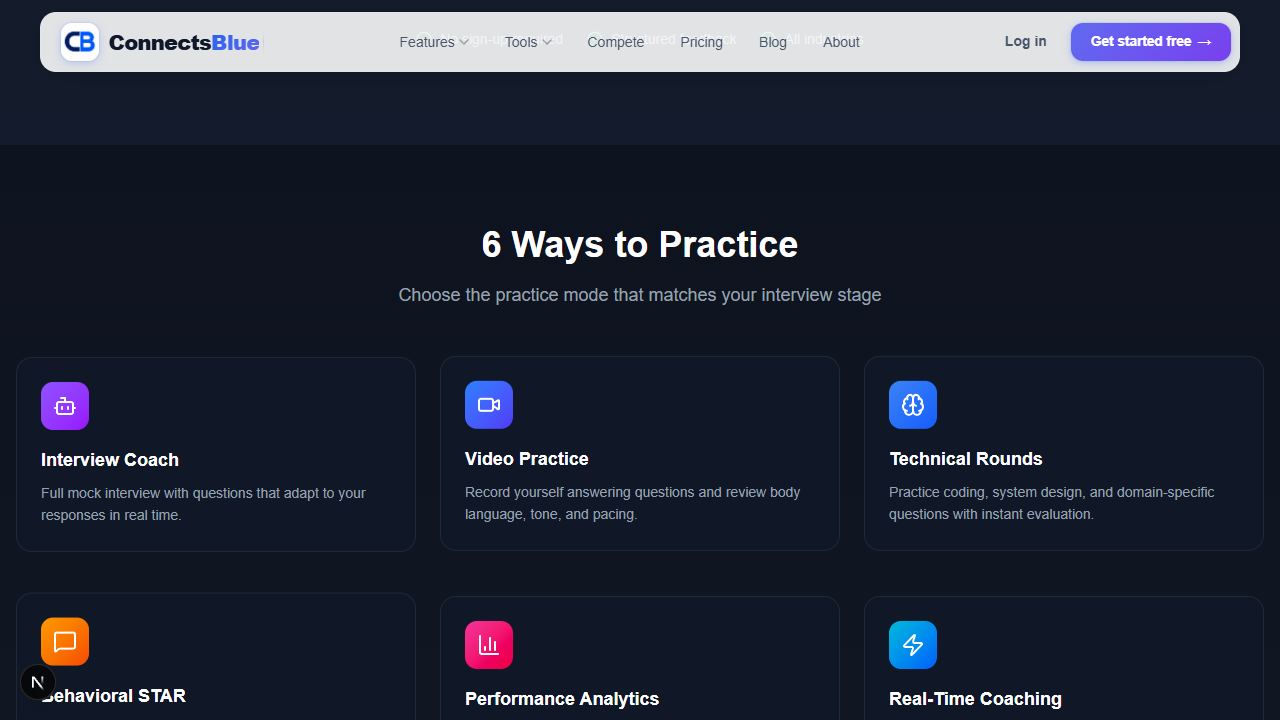
Screenshot captured from the public ConnectsBlue product experience.
Before accepting
Before accepting a startup or unicorn offer
Use this checklist to compare fixed pay, equity, runway, role scope, manager expectations, and workload risk.
- Separate fixed pay, bonus, equity, and benefits.
- Ask why the role pays above or below market.
- Review vesting, liquidity, dilution, and clawback terms.
- Check company runway and hiring urgency where available.
- Clarify manager expectations and work model.
- Compare learning upside with personal risk tolerance.
Startup pay FAQ
Questions candidates ask about Indian unicorn compensation
Do unicorns always pay more than established companies?
No. Some roles pay a premium, while others trade cash for equity, growth, or brand value. Compare the specific offer, not the category.
How should I value startup equity?
Treat it as possible upside until vesting, liquidity, dilution, exercise rules, and company stage are clear.
What questions should I ask a startup recruiter?
Ask what problem the role solves, how success is measured, how the team is structured, and which compensation components are fixed.
When is a lower startup offer still worth considering?
It may be worth considering if the learning curve, ownership, manager quality, and growth path are strong enough for your goals and constraints.
Review the signal
Understand the premium before accepting it
Compare cash, equity, role scope, and operating risk before treating a startup offer as better.
Related Guides
Continue with practical articles on the same theme
Salary Negotiation Guide: Ask With Market Evidence
A practical negotiation guide for researching market range, timing the ask, comparing base pay with benefits, and choosing a calm counter-offer.
Global Salary Trends: Compare Offers Across Markets
A compensation-trend guide for candidates comparing remote pay, local bands, currency risk, equity, and benefits across markets.
Remote Pay: How to Benchmark International Offers
Remote Pay: How to Benchmark International Offers helps candidates compare pay with context instead of reacting only to the base number or the loudest salary headline.