Salary Negotiation Guide: Ask With Market Evidence
A practical negotiation guide for researching market range, timing the ask, comparing base pay with benefits, and choosing a calm counter-offer.
A negotiation works best after the candidate understands role level, location, compensation mix, competing options, and the company timing.
What to test in the market
- Wait for enough offer detail before negotiating exact numbers.
- Anchor the ask in role level, market evidence, scope, and competing options where truthful.
- Compare total compensation before accepting a higher base with weaker benefits or riskier terms.
- Keep the tone calm and written follow-up clear so the process does not lose momentum.
Offer baseline
Do not negotiate a number you have not understood
Before countering, separate fixed pay, variable pay, equity, benefits, joining support, location expectations, and review cycle. Two offers with the same headline number can behave very differently.
The first negotiation step is to write the current offer in plain terms and mark what is missing.
- Confirm base, bonus, equity, benefits, joining date, and work model.
- Ask for unclear components in writing.
- Compare the role scope with the level being offered.
- Decide which parts matter most before proposing changes.
Evidence order
Lead with facts before the ask
A strong negotiation message does not begin with pressure. It begins with appreciation, confirms interest, summarizes the evidence, then states the requested adjustment.
Evidence can include current market range, competing offer, specialized skill, interview feedback, scope increase, relocation cost, or notice-period trade-off.
| Evidence | When it helps | Risk if overstated |
|---|---|---|
| Market range | Role and location are comparable | Generic salary websites can be too broad |
| Competing offer | It is real and comparable | False leverage damages trust |
| Scope | Responsibilities exceed the stated level | Vague impact claims sound weak |
| Joining constraints | Relocation or notice buyout affects cost | Personal pressure alone rarely changes bands |
Counter message
Keep the ask specific and easy to approve
The best counter-offer gives the recruiter or hiring manager a clear request to take back internally. Avoid a long emotional explanation.
Use ConnectsBlue to keep offer notes, role context, and application history together so the final decision considers the whole opportunity.
- Ask for a specific range or component change.
- Mention continued interest in the role.
- Ask what flexibility exists if base pay is fixed.
- Confirm revised terms in writing before accepting.
Product proof
Career GPS shown inside ConnectsBlue
The guide connects planning advice to the real roadmap surface candidates use to define target roles, skill gaps, milestones, and next actions.
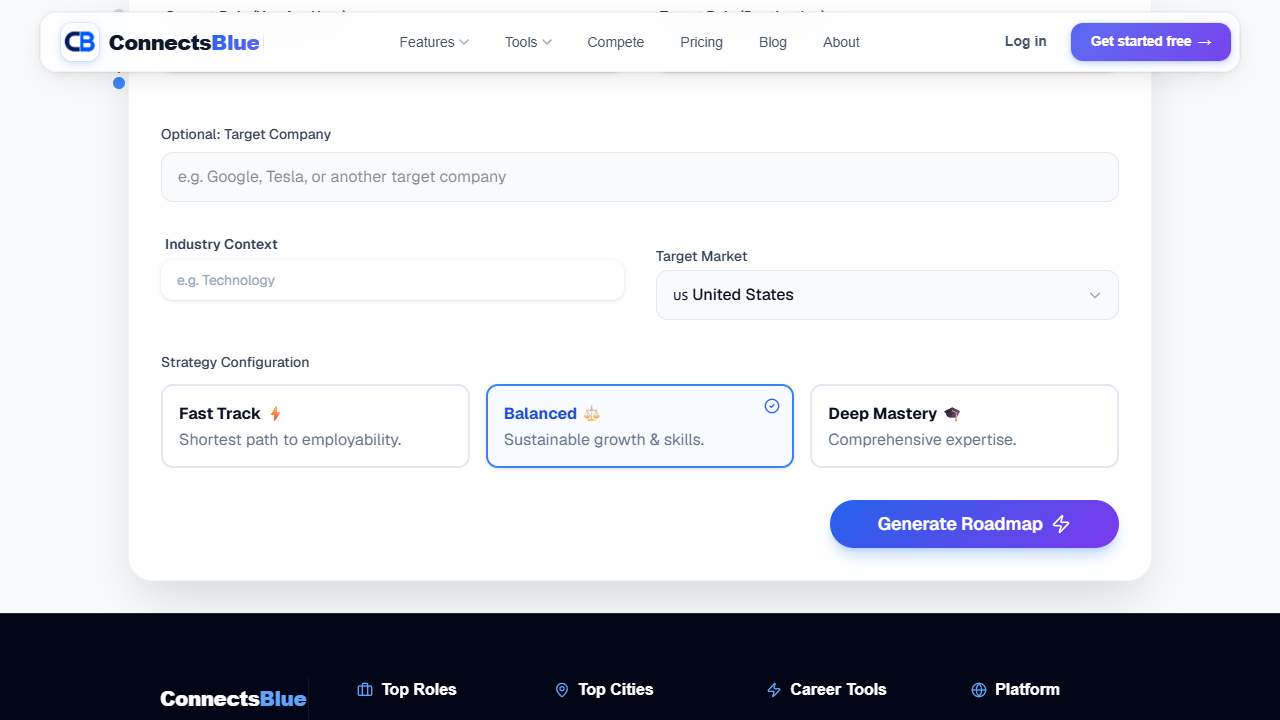
Screenshot captured from the public ConnectsBlue product experience.
Before countering
Before sending a counter-offer
Use this checklist to confirm the offer details, evidence, request, timing, and written follow-up before negotiating.
- Write the full offer components before judging the headline number.
- Collect role-level and location-specific market evidence.
- Decide the preferred ask and acceptable fallback.
- Prepare a short written message with appreciation, evidence, and request.
- Ask about non-base flexibility if the salary band is fixed.
- Confirm revised terms in writing before accepting.
Offer FAQ
Questions candidates ask before salary negotiation
When should I negotiate salary?
Negotiate after you have enough offer detail to compare the role, level, location, compensation mix, benefits, and timing. Exact numbers are easier to discuss after the employer shows intent.
What if the company says the salary band is fixed?
Ask whether there is flexibility in joining bonus, review timing, remote support, relocation, notice buyout, title, learning budget, or benefits. Some components move even when base pay does not.
Should I share a competing offer?
Share it only if it is real, comparable, and relevant. Use it as evidence, not a threat.
How much should I ask for?
Use a range grounded in market evidence, current offer gap, role scope, and your walk-away point. Avoid arbitrary percentages without context.
Review the signal
Ask with evidence and keep the process calm
A useful counter-offer is specific, truthful, and easy for the employer to review.
Related Guides
Continue with practical articles on the same theme
Remote Pay: How to Benchmark International Offers
Remote Pay: How to Benchmark International Offers helps candidates compare pay with context instead of reacting only to the base number or the loudest salary headline.
Executive Compensation vs Entry-Level: The Architecture of Pay
This salary guide keeps negotiation practical: know the range, document impact, understand tradeoffs, and decide what matters before the call.
Global Salary Trends: Compare Offers Across Markets
A compensation-trend guide for candidates comparing remote pay, local bands, currency risk, equity, and benefits across markets.