Salary Negotiation Scripts: Ask Clearly Without Overplaying Leverage
A negotiation wording guide for candidates who need clear scripts, evidence order, written-offer checks, and respectful follow-up language.
Negotiation scripts help only when the candidate has real offer detail, role context, and a respectful tone.
What to test in the market
- Use short messages that combine interest, evidence, and one clear ask.
- Choose wording based on the negotiation moment, not a universal template.
- Keep competing-offer language truthful and calm.
- Confirm revised terms in writing before accepting.
Message order
Use the same four-part structure for most asks
A good negotiation message is short enough to forward. It usually includes appreciation, continued interest, evidence, and one clear request.
The wording should sound like the candidate, not like a copied script.
- Open with interest in the role.
- State the evidence behind the request.
- Ask for a specific adjustment or range.
- Invite discussion without sounding threatening.
Script scenarios
Match the wording to the moment
The right message changes depending on whether the candidate is giving an expected range, countering a written offer, asking about benefits, or confirming revised terms.
Use the script as a structure, then edit it with truthful details.
| Scenario | Message focus | Avoid |
|---|---|---|
| Expected salary | Range, flexibility, and role scope | A single number too early |
| Counter-offer | Market evidence and requested adjustment | Pressure without facts |
| Benefits ask | Specific component and reason | A long list of wishes |
| Final confirmation | Written terms and start details | Verbal acceptance with unclear terms |
Tone check
Keep the message calm enough to preserve momentum
Negotiation is a business conversation. The candidate can be firm without sounding combative.
Use ConnectsBlue to keep offer notes, role details, and salary context organized before sending the message.
- Remove claims that cannot be supported.
- Avoid artificial urgency unless there is a real deadline.
- Keep the ask easy to answer.
- Save the final agreed terms before accepting.
Product proof
Career GPS shown inside ConnectsBlue
The guide connects planning advice to the real roadmap surface candidates use to define target roles, skill gaps, milestones, and next actions.
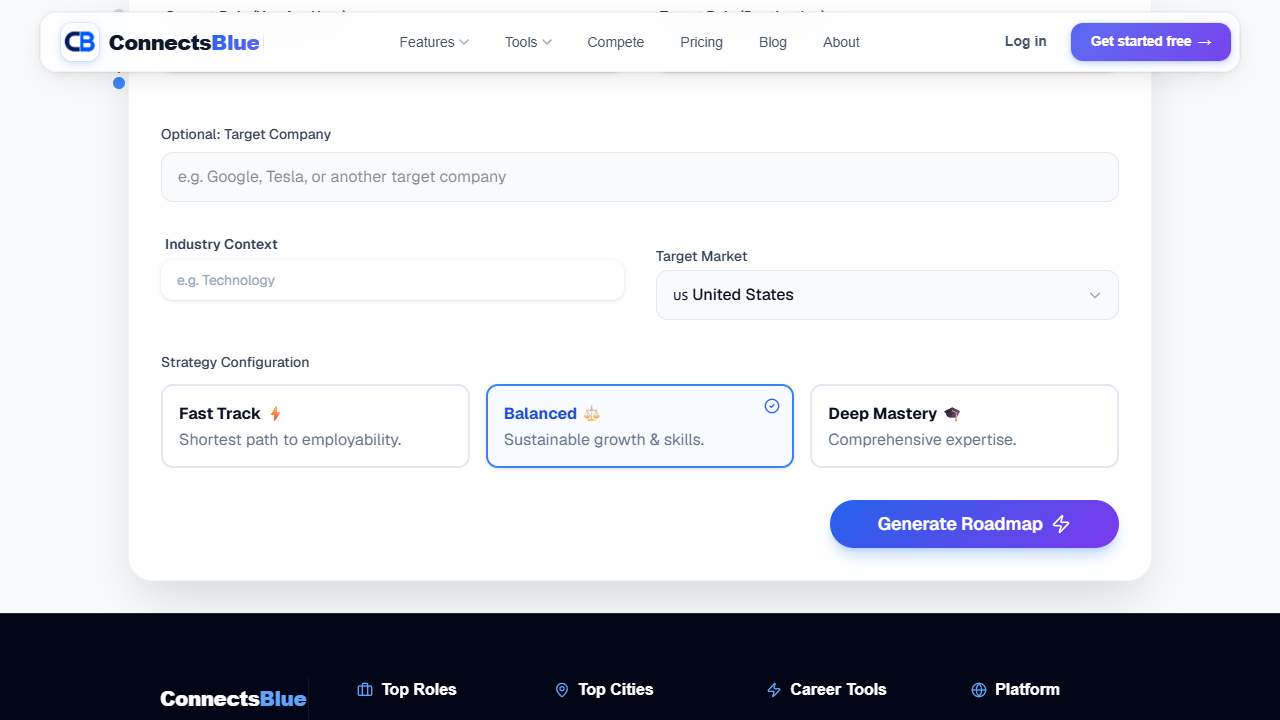
Screenshot captured from the public ConnectsBlue product experience.
Before sending
Before sending a salary negotiation message
Use this checklist to confirm offer detail, evidence, ask, tone, fallback option, and written follow-up before sending the message.
- Confirm current offer details before drafting.
- Choose the negotiation moment: range, counter, benefit, or confirmation.
- Write the evidence in one or two sentences.
- Ask for one primary adjustment.
- Remove pressure language that is not backed by facts.
- Save revised terms in writing before accepting.
Script FAQ
Questions candidates ask about salary negotiation scripts
Should I copy a salary script exactly?
No. Use the structure, but rewrite the message with your role, offer details, evidence, and natural tone.
What should a counter-offer message include?
Include appreciation, continued interest, the evidence behind your request, the adjustment you are asking for, and openness to discuss.
How do I mention a competing offer?
Mention it only if it is real and relevant. Keep the wording factual and avoid turning it into a threat.
What if the company cannot increase base pay?
Ask whether there is flexibility in bonus, review timing, equipment, relocation, learning budget, leave, or work model.
Review the signal
Use scripts as structure, not as borrowed personality
Keep the message truthful, concise, specific, and easy for the employer to review.
Related Guides
Continue with practical articles on the same theme
Salary Negotiation Guide: Ask With Market Evidence
A practical negotiation guide for researching market range, timing the ask, comparing base pay with benefits, and choosing a calm counter-offer.
Global Salary Trends: Compare Offers Across Markets
A compensation-trend guide for candidates comparing remote pay, local bands, currency risk, equity, and benefits across markets.
Remote Pay: How to Benchmark International Offers
Remote Pay: How to Benchmark International Offers helps candidates compare pay with context instead of reacting only to the base number or the loudest salary headline.