Global Salary Trends: Compare Offers Across Markets
A compensation-trend guide for candidates comparing remote pay, local bands, currency risk, equity, and benefits across markets.
Global salary trends are shaped by remote hiring, local pay bands, currency exposure, inflation, contractor models, and company willingness to hire across borders.
What to decide before acting
- Compare global offers by cash, currency, benefits, legal status, work model, and growth path.
- Ask whether pay is location-based, role-based, or tied to a global band.
- Treat contractor offers differently from employee offers because risk and benefits move to the candidate.
- Use trends as context, then evaluate the specific written offer.
Pay models
Find out which global pay model the company uses
A company can advertise remote work while using a local-market pay band. Another company may use regional bands, global bands, contractor rates, or employer-of-record structures.
The label matters because it changes negotiation room, benefits, taxes, and long-term growth.
- Ask whether the range is local, regional, or global.
- Clarify employee, contractor, or employer-of-record status.
- Check currency, payout schedule, and exchange-rate exposure.
- Compare paid leave, health coverage, equipment, and retirement benefits.
Offer comparison
Compare benefits and risk beside base pay
A high international base can look attractive until taxes, unpaid leave, exchange-rate movement, missing health coverage, and contractor compliance are included.
Candidates should model the practical yearly value instead of comparing headline monthly pay alone.
| Offer factor | Why it changes value | Question to ask |
|---|---|---|
| Currency | Exchange movement can change real income | Which currency is paid and how often? |
| Employment status | Contractors carry more risk | Who handles taxes, benefits, and compliance? |
| Benefits | Health, leave, equipment, and retirement affect net value | Which benefits are written into the offer? |
| Work hours | Time-zone overlap can affect lifestyle | What overlap is expected every week? |
Trend application
Turn salary trends into sharper offer questions
Market trends should help candidates ask sharper questions, not inflate expectations without evidence.
Use ConnectsBlue to compare roles and keep salary notes beside each opportunity, especially when one role is local and another is cross-border.
- Use trends to identify which components need clarification.
- Compare offers in the same yearly currency view.
- Check growth path, appraisal cycle, and role scope.
- Keep a written note of assumptions before accepting.
Product proof
Career GPS shown inside ConnectsBlue
The guide connects planning advice to the real roadmap surface candidates use to define target roles, skill gaps, milestones, and next actions.
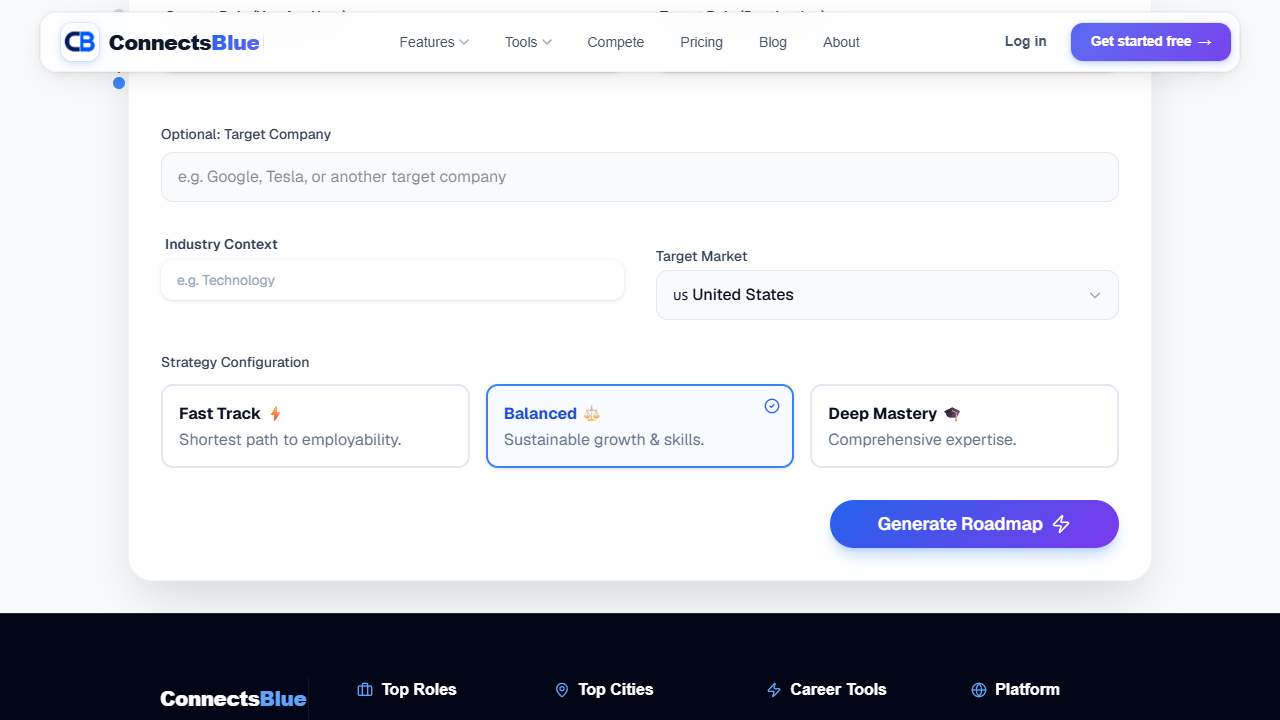
Screenshot captured from the public ConnectsBlue product experience.
Before comparing
Before comparing global offers
Use this checklist to compare currency, employment status, benefits, taxes, work hours, and offer terms before judging salary.
- Confirm local, regional, or global pay basis.
- Compare employee and contractor risk separately.
- Convert offers into the same yearly view.
- Check benefits, leave, equipment, taxes, and compliance.
- Ask about appraisal cycle and growth path.
- Save assumptions before making the decision.
Global salary FAQ
Questions candidates ask about global salary trends
Are global remote salaries becoming equal?
Not universally. Some companies use global bands, but many still adjust pay by location, employment model, and cost structure.
Is a contractor offer better if the base pay is higher?
Not always. Contractor offers may exclude benefits, paid leave, tax support, severance, equipment, and employment protections.
How should I compare offers in different currencies?
Convert to the same yearly currency view, then include exchange-rate risk, tax treatment, benefits, and payout reliability.
What should I ask before accepting a global role?
Ask about pay basis, employment status, time-zone overlap, benefits, taxes, equipment, leave, and how performance reviews affect compensation.
Make it concrete
Translate trends into offer questions
Use salary trends as context, then inspect the exact written offer and risk profile.
Related Guides
Continue with practical articles on the same theme
Salary Negotiation Guide: Ask With Market Evidence
A practical negotiation guide for researching market range, timing the ask, comparing base pay with benefits, and choosing a calm counter-offer.
Remote Pay: How to Benchmark International Offers
Remote Pay: How to Benchmark International Offers helps candidates compare pay with context instead of reacting only to the base number or the loudest salary headline.
Executive Compensation vs Entry-Level: The Architecture of Pay
This salary guide keeps negotiation practical: know the range, document impact, understand tradeoffs, and decide what matters before the call.