Navigating the Modern Job Market
A modern job-market guide for candidates who need to stay focused on target roles, truthful proof, recruiter feedback, and weekly search decisions.
The modern job market rewards candidates who can focus: clear target roles, readable proof, fast follow-up, and interview examples that survive detail.
What to test in the market
- Choose a narrow target before applying at volume.
- Use job descriptions to decide which proof belongs in the resume.
- Track recruiter feedback and interview outcomes so the search improves.
- Treat tools as support for decisions, not as a substitute for evidence.
Focus first
Narrow the target before increasing activity
A changing market makes broad applying tempting. It also makes broad applying harder to learn from.
Pick a role family, seniority level, location or work model, and compensation expectation before changing resumes or outreach.
- Write the role family in plain language.
- Choose three repeated job-description signals.
- Remove roles that conflict with non-negotiable constraints.
- Review whether the target is producing qualified replies.
Proof discipline
Make every claim easy to verify
Recruiters and interviewers are scanning for evidence. Claims about adaptability, ownership, communication, or technical depth need examples behind them.
Use the market to decide which proof matters most instead of adding every possible skill.
| Search signal | Candidate response | Weak habit |
|---|---|---|
| Role keywords repeat across listings | Move matching proof higher in the resume | Stuffing keywords without examples |
| Recruiters ask the same question | Prepare a clearer answer and follow-up detail | Blaming the question |
| No replies from a source | Review fit and resume version | Sending more of the same |
| Late-stage salary mismatch | Clarify range earlier | Waiting until final round |
Feedback loop
Let the market change the next action
A modern search should change based on evidence: replies, rejections, interview questions, salary conversations, and source quality.
Use ConnectsBlue to keep roles, preparation, and follow-ups in one view so the next action is based on what actually happened.
- Review source quality weekly.
- Update resume proof after repeated screening gaps.
- Practice the interview question that keeps exposing weak detail.
- Pause channels that create noise without progress.
Product proof
ConnectsBlue jobs shown as a real search surface
The article links search advice to real job discovery pages where candidates can browse active roles and compare fit before applying.
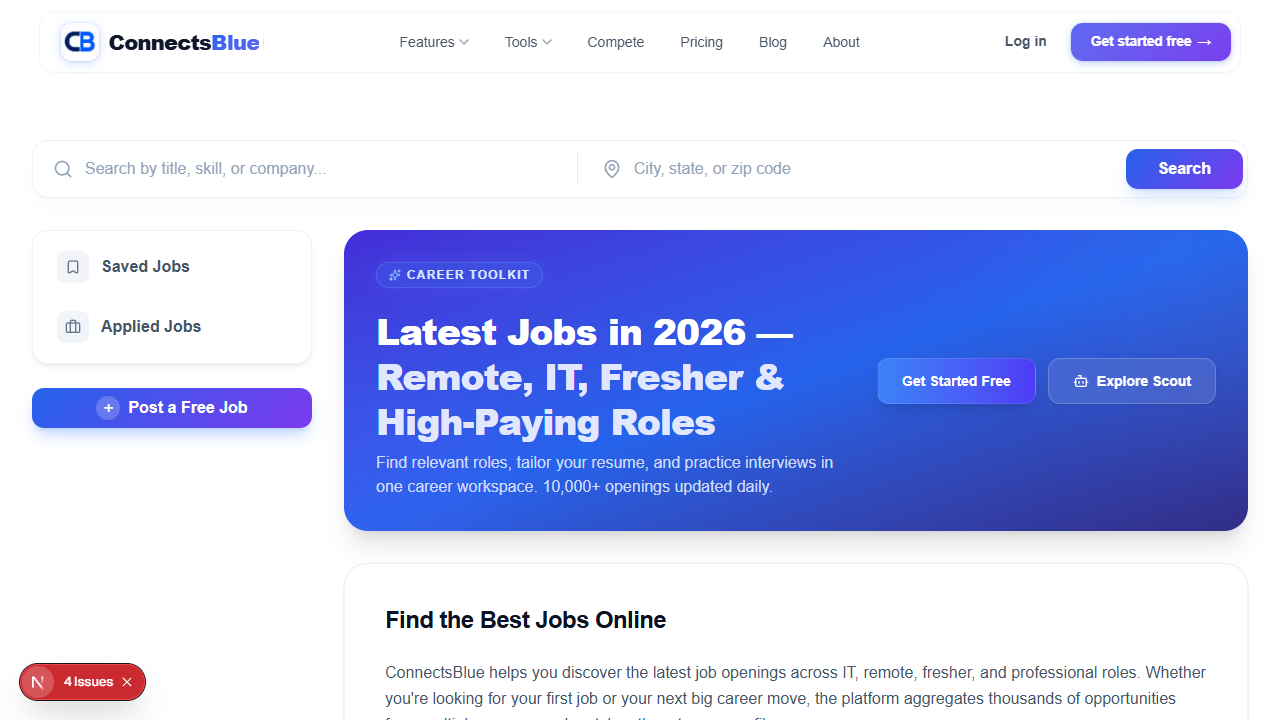
Screenshot captured from the public ConnectsBlue product experience.
Weekly check
Before changing your job-search strategy
Use this checklist to inspect target role, proof quality, source response, interview feedback, and salary context before changing direction.
- Choose one role family and one backup.
- Mark repeated requirements from current job descriptions.
- Move matching proof higher in the resume.
- Track replies by source and resume version.
- Review interview gaps after each round.
- Change one search variable at a time.
Market FAQ
Questions candidates ask about the modern job market
How do I stay focused when job requirements keep changing?
Track repeated signals across real job descriptions. If a requirement appears often for your target role, build proof for it before chasing unrelated skills.
Should I apply to more jobs or improve my profile?
Check the current bottleneck. If no one replies, improve targeting and resume evidence. If interviews stall, improve examples and follow-up answers.
How should I use job-search tools?
Use tools to organize roles, prepare evidence, and review feedback. Keep final content truthful and specific to your experience.
What is the best weekly review habit?
Review source quality, reply rate, interview stage, resume version, and next action. Then change only one part of the search.
Review the signal
Stay focused enough to learn from the market
Use clear targets, truthful proof, and weekly feedback to keep the search moving.
Related Guides
Continue with practical articles on the same theme
Protect Your Mental Health During a Long Job Search
A practical guide for protecting energy during a long search by limiting low-quality applications, tracking signals, and keeping follow-up habits sustainable.
Remote Work Salaries: How Global Pay Bands Are Changing
This salary guide keeps negotiation practical: know the range, document impact, understand tradeoffs, and decide what matters before the call.
Networking in the Digital Age Without Sounding Transactional
This networking guide focuses on credibility: who to contact, what to say, when to follow up, and how to keep the relationship useful.