Professional Networking Guide for Job Seekers
A practical networking guide for job seekers who need referral context, useful follow-up, and role-specific conversations instead of broad connection requests.
Networking fails when candidates send broad connection requests without a role target, shared context, or a useful reason for the conversation.
What to take from this guide
- Define the target role before asking for introductions.
- Send outreach that includes context, one specific ask, and a low-friction next step.
- Make LinkedIn, resume, and application proof consistent before requesting referrals.
- Track conversations so follow-up is timely and respectful.
Network map
Start with the people closest to the role
A useful network map starts with target companies, target roles, and the people who can explain those environments. It does not start with the largest possible contact list.
Group people by what they can help with: role reality, company context, referral path, interview preparation, or hiring-manager expectations.
- List ten target companies before sending messages.
- Separate alumni, former colleagues, recruiters, hiring managers, and peer practitioners.
- Write why each person is relevant before contacting them.
- Avoid asking for a referral before the fit story is clear.
Outreach note
Make the message easy to answer
Good outreach respects the other person time. It gives context, proves the candidate did basic research, and asks one specific question.
The message should not force the recipient to infer the target role, rewrite the candidate profile, or guess what help is needed.
| Message part | Strong version | Weak version |
|---|---|---|
| Context | I am targeting customer success roles in B2B SaaS | I am looking for opportunities |
| Reason | Your team moved from support to success motion | Your profile is inspiring |
| Ask | Could I ask two questions about the role expectations? | Can you refer me? |
| Proof | Attached one relevant project note or resume link | Please see my profile |
Follow-up
Track conversations like part of the job search
Networking should not become a pile of forgotten messages. Save the contact, context, date, reply, next action, and any role discussed.
ConnectsBlue can help keep the search organized by tying serious conversations back to target roles and preparation tasks.
- Follow up with a short thank-you and one useful update.
- Do not send repeated referral asks without new context.
- Share the final application link or role once fit is clear.
- Review which conversations produce useful next steps.
Product proof
ConnectsBlue jobs shown as a real search surface
The article links search advice to real job discovery pages where candidates can browse active roles and compare fit before applying.
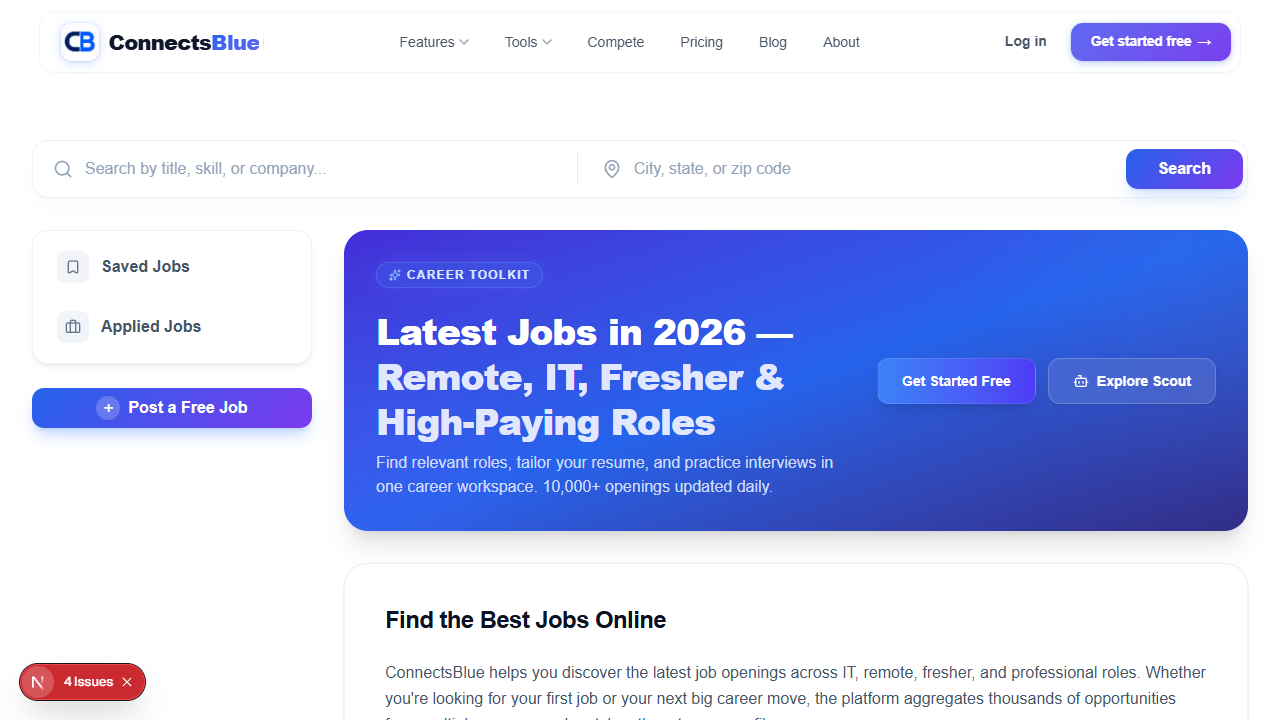
Screenshot captured from the public ConnectsBlue product experience.
Before outreach
Before asking someone for help
Use this checklist to make sure the message has a role target, clear context, credible proof, and a respectful next step.
- Choose the role family before contacting people.
- Write a short reason for each outreach message.
- Use one specific ask per message.
- Prepare resume or profile proof before asking for a referral.
- Track replies and next actions in one place.
- Follow up only when there is useful new context.
Networking FAQ
Questions candidates ask about professional networking
Should I ask for a referral in the first message?
Usually not. Start with context or a short question unless the person already knows your work well. A referral ask lands better after fit is clear.
What makes networking messages feel spammy?
Generic praise, unclear target roles, long paragraphs, and immediate referral requests make messages feel copied. Specific context and one useful question help.
How many people should I contact each week?
A small number of relevant messages is better than high-volume outreach. Track replies and adjust based on conversation quality.
How can ConnectsBlue support networking?
Use it to define target roles, prepare proof, and keep outreach tied to real applications instead of running networking as a separate activity.
Next step
Make every message easier to answer
Start with target roles, useful context, and one clear ask so referrals and conversations feel natural.
Related Guides
Continue with practical articles on the same theme
Networking in the Digital Age Without Sounding Transactional
This networking guide focuses on credibility: who to contact, what to say, when to follow up, and how to keep the relationship useful.
Protect Your Mental Health During a Long Job Search
A practical guide for protecting energy during a long search by limiting low-quality applications, tracking signals, and keeping follow-up habits sustainable.
Remote Work Salaries: How Global Pay Bands Are Changing
This salary guide keeps negotiation practical: know the range, document impact, understand tradeoffs, and decide what matters before the call.