Warm pipeline
Talent Pool Management Guide for Recruiters
How to organize past candidates, referrals, event contacts, and sourced profiles so future roles start with a useful shortlist.
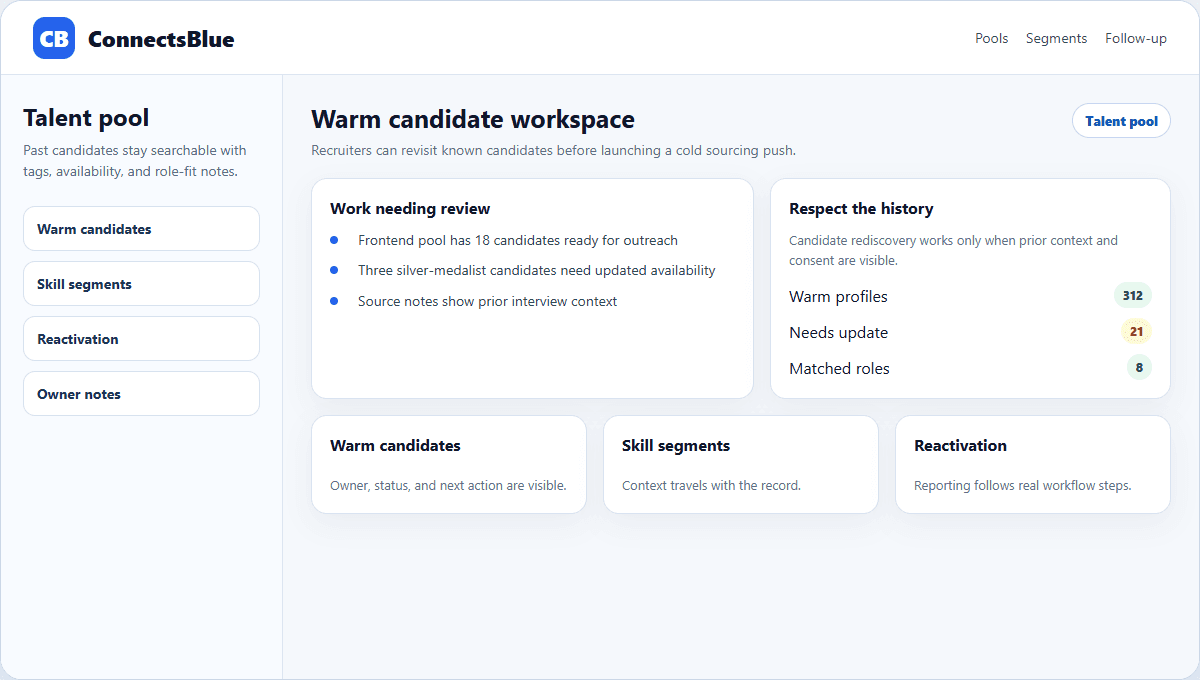
A talent pool is not a folder of old resumes. It is a living shortlist with context: why the person matters, which roles might fit, when to contact them, and what happened last time.
Most teams already have usable talent hidden across rejected applicants, silver-medal finalists, career fair contacts, referrals, and recruiter outreach. The hard part is keeping that pool current enough to trust.
Structure
Segment pools by hiring use case
Large generic pools become unusable quickly. Start with segments that match repeat hiring needs: frontend engineers, account executives, customer support, finance analysts, campus graduates, or location-specific talent.
Each segment should have a clear reason to exist and a person responsible for keeping it healthy.
- Tag skills and role families separately from current job title.
- Keep city, remote preference, notice period, and seniority visible.
- Record why a candidate was saved to the pool.
- Add a next-contact date instead of relying on memory.
Candidate history
Preserve the reason a candidate was not hired
History
Silver medalist
Why it matters later
Strong fit who lost to timing or headcount.
Bad habit
Marking as rejected with no context.
History
Too early
Why it matters later
Candidate may become ready after more experience.
Bad habit
Deleting them from the pool.
History
Compensation gap
Why it matters later
Market or budget may change for a future role.
Bad habit
Hiding salary notes in email.
History
Location mismatch
Why it matters later
Remote policy or relocation preference may change.
Bad habit
Only storing current city.
Maintenance
Keep the pool small enough to act on
A healthy talent pool has fewer stale records and more useful context. It should help recruiters find ten good people faster, not search through ten thousand vague profiles.
Monthly cleanup
Archive candidates with no usable context, outdated contact details, or unclear fit.
Role launch
Search warm pools before publishing a role to every channel.
Candidate consent
Respect communication preferences and unsubscribe requests.
Manager review
Let hiring managers see why a saved candidate may fit the new role.
Outcome
Measure whether pools reduce cold sourcing
Talent pool success is not the number of people stored. It is whether recruiters can start a new search with relevant, reachable, already-contextual candidates.
Implementation notes
How to use this guide in a real hiring workflow
Use this article as a working review document, not just a buying overview. Compare talent pool management guide for recruiters with the way your team currently works, then fix the places where ownership, evidence, or candidate communication is unclear.
- Name the owner for the stage before changing configuration.
- Define the evidence recruiters and managers should capture.
- Review candidate-facing messages for clarity and tone.
- Measure whether the change reduced delay, rework, or ambiguity.
Questions teams ask
Talent Pool Management Guide for Recruiters FAQ
What is talent pool management?
It is the process of organizing warm candidate relationships into useful segments with fit context, history, ownership, and follow-up timing.
Who should be added to a talent pool?
Add silver-medal candidates, strong referrals, event contacts, sourced prospects, and past applicants who may fit repeat roles.
How often should talent pools be reviewed?
Review active pools monthly and before each repeat role launch so stale records do not pollute the shortlist.
Next step
Turn past candidate context into a usable shortlist.
Use ConnectsBlue to organize talent pools by role family, readiness, history, and next follow-up.
Explore recruiting software