Candidate follow-up
Candidate Nurture Campaign Guide for Recruiters
How to stay in touch with warm candidates without sending generic drip emails that weaken trust.
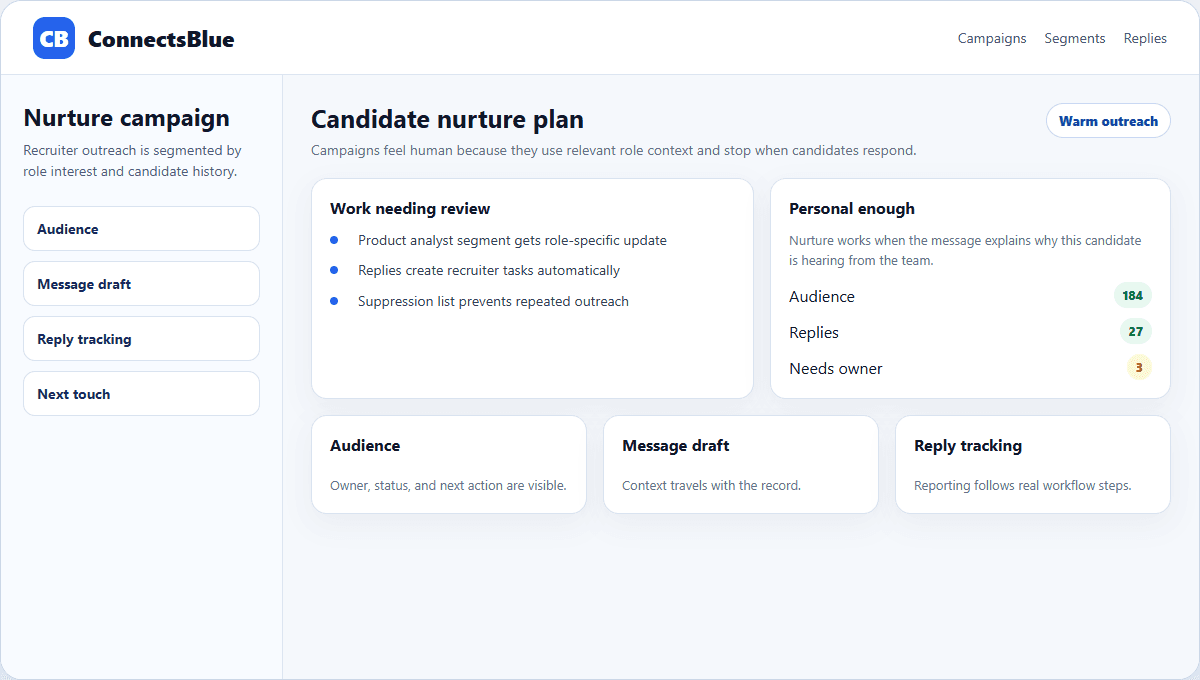
Candidate nurture should feel like a continuation of a real hiring relationship. If every message sounds like a newsletter, strong candidates will tune it out.
The best nurture programs are small, relevant, and tied to role timing. They remind recruiters when to follow up and help candidates understand why the conversation is worth reopening.
Audience
Only nurture candidates with a reason to hear from you
A nurture list should not be every resume in the database. It should contain candidates who have a plausible future fit and enough context to make outreach specific.
- Silver-medal candidates from recent searches.
- Qualified applicants who missed timing, compensation, or location fit.
- Event contacts who asked to hear about specific roles.
- Past candidates who match recurring hiring needs.
Message design
Write from the relationship, not from the campaign
Message type
Role reopening
Useful content
Why this role may fit based on prior context.
What to avoid
A generic "we are hiring" blast.
Message type
Market update
Useful content
A short note about relevant team growth or hiring plan.
What to avoid
Long company-news newsletters.
Message type
Check-in
Useful content
One specific question about timing, location, or interest.
What to avoid
Asking candidates to re-enter all details.
Message type
Re-engagement
Useful content
A respectful opt-in path and clear next step.
What to avoid
Pressure language or repeated reminders.
Cadence
Use fewer touches with better timing
A good nurture cadence has pauses. It should respect candidate attention, hiring seasonality, and communication preferences. More messages are not better if they do not carry better context.
After close
Send a short, honest note to strong candidates who were not selected.
Before repeat role
Review warm candidates before starting cold sourcing.
After candidate reply
Switch from campaign mode to recruiter-owned conversation.
After no response
Stop after a reasonable attempt and preserve the history.
Trust
Make unsubscribe and preference handling visible
Recruiting teams need the same discipline as customer teams: consent, preferences, relevance, and clear ownership. A candidate who asks for fewer messages should not keep receiving campaign mail because the note lives in another tool.
Implementation notes
How to use this guide in a real hiring workflow
Use this article as a working review document, not just a buying overview. Compare candidate nurture campaign guide for recruiters with the way your team currently works, then fix the places where ownership, evidence, or candidate communication is unclear.
- Name the owner for the stage before changing configuration.
- Define the evidence recruiters and managers should capture.
- Review candidate-facing messages for clarity and tone.
- Measure whether the change reduced delay, rework, or ambiguity.
Questions teams ask
Candidate Nurture Campaign Guide for Recruiters FAQ
What is candidate nurture?
Candidate nurture is structured follow-up with warm candidates who may fit future roles, using relevant context and respectful timing.
How often should recruiters nurture candidates?
Use fewer, better-timed messages. Follow up around relevant role openings, major fit changes, or candidate-requested timing.
What makes a nurture campaign feel spammy?
Generic language, too many touches, unclear opt-out handling, and messages that ignore the candidate history all make nurture feel spammy.
Next step
Keep warm candidates warm without sounding generic.
Use ConnectsBlue to connect candidate history, role timing, and recruiter-owned follow-up.
View employer tools